
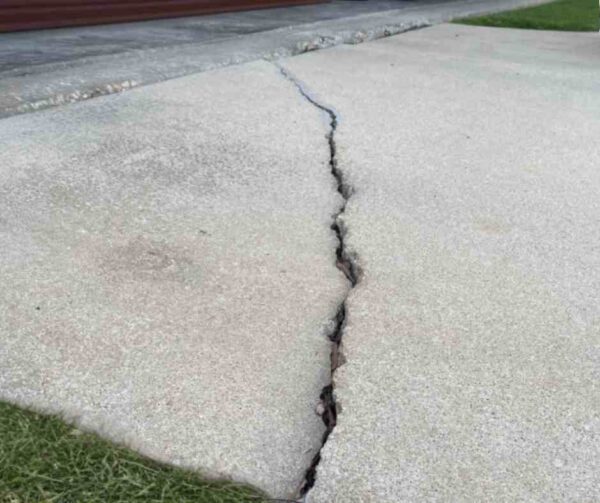
Concrete slab sinking?
Discovering that a concrete slab is sinking is never a welcome surprise — especially on a commercial property, where safety, drainage, and long-term performance are critical. While the surface damage may be obvious, slab sinking is almost always a sign of deeper issues below the concrete.
In Southwest Florida, slab settlement is most often tied to soil instability beneath the slab. When those underlying conditions go unaddressed, they can disrupt load distribution, interfere with drainage, and compromise the long-term performance of the structure.
Understanding why slabs lose support is the first step toward correcting the problem — and preventing minor settlement from becoming a more serious structural issue.
Why Concrete Slab Sinking Happens in Southwest Florida
Sandy, Non-Cohesive Soils
Much of SWFL is built on sandy soils that lack natural binding strength. When these soils shift, compress, or migrate, the slab above them can lose uniform support and settle unevenly.
Water Movement and Soil Erosion
Heavy rainfall, storm events, poor grading, and roof or site drainage can move soil out from beneath slabs. As voids form, the concrete settles into the empty space below, leading to sinking or sloping surfaces.
Inadequate Subgrade Compaction
If the soil beneath a slab was not compacted to proper density during construction, it will compress over time under the slab’s weight. This type of settlement often appears months or years after installation.
Moisture Fluctuations
Repeated wet-dry cycles common in Florida alter soil volume and density. These changes weaken the soil’s ability to consistently support the slab, contributing to gradual settlement.
Heavy Commercial Loads
Commercial slabs are subjected to concentrated and repetitive loads such as delivery trucks, forklifts, equipment, dumpsters, and storage. When soil support is compromised, these loads accelerate slab movement.
Why Concrete Slab Sinking Shouldn’t Be Ignored
As a slab settles, secondary issues often follow:
- Cracking and surface deterioration
- Uneven floors and trip hazards
- Misalignment of doors, equipment, or loading areas
- Drainage reversal and water intrusion
Left uncorrected, slab sinking can create safety concerns and increase repair costs over time.
Can Concrete Slab Sinking Be Prevented?
Slab sinking can often be reduced or avoided, but only when soil and water conditions are addressed early.
Preventative measures include:
- Proper subgrade preparation and compaction before construction
- Effective site grading to move water away from slab edges
- Controlled roof and surface drainage to prevent soil washout
- Matching slab design to expected commercial load demands
While no slab is immune to soil movement, proactive design and drainage planning significantly reduce the risk of settlement over time.
How Concrete Slab Sinking Is Addressed
The appropriate fix depends on the cause and extent of settlement.
- Slab leveling methods restore support by filling voids beneath the concrete and lifting it back to proper elevation.
- Soil stabilization may be required where subgrade conditions are weak or inconsistent.
- Structural support systems are used in more severe cases to transfer loads to stable soil layers.
A professional evaluation is critical to determine which approach is appropriate for a commercial site.
The Bottom Line
Concrete slab sinking in SWFL is typically driven by soil and moisture behavior — not concrete failure. When support beneath a slab is compromised, the slab will continue to move until the underlying conditions are corrected.
For commercial properties, early identification matters. Addressing slab settlement before it progresses helps reduce safety risks, prevent secondary damage, and avoid more disruptive structural repairs later. A proper evaluation should always focus on why the slab is sinking, not just what the surface looks like.
Stabilizing the soil, restoring uniform support, and correcting drainage issues are what stop slab settlement from recurring and protect the long-term performance of the structure.