Structural concrete walls play a critical — and often unseen — role in buildings that rely on concrete foundation and wall systems. While flatwork such as slabs and driveways is easy to identify, these vertical wall systems are responsible for load transfer, structural alignment, and long-term stability within the building. When structural concrete walls are properly executed, they provide a stable reference for everything constructed above them. When they are not, issues tend to emerge later in the build or over time, when correction becomes significantly more complex and costly.
Let’s take a closer look at structural concrete walls and their function within foundation and wall systems.
What Are Structural Concrete Walls?
Structural concrete walls are load-bearing concrete elements formed and placed in a vertical orientation as part of a building’s foundation and wall system. These walls are designed to carry vertical loads, resist lateral forces, and integrate directly with footings, slabs, and framing systems to establish structural continuity throughout the building.
Common Forms of Structural Concrete Walls
Vertical concrete is typically constructed in one of two primary forms, depending on structural requirements, design intent, and regional building practices.
Cast-In-Place
Cast-in-place vertical concrete is poured into forms to create monolithic wall systems. This approach is commonly used where continuous wall strength, precise geometry, or specific engineering requirements are needed.
Typical applications include:
- Stem walls
- Foundation walls
- Shear walls
- Structural walls requiring continuous reinforcement
These systems are formed, reinforced, and poured as a single integrated element.
CMU Concrete Systems
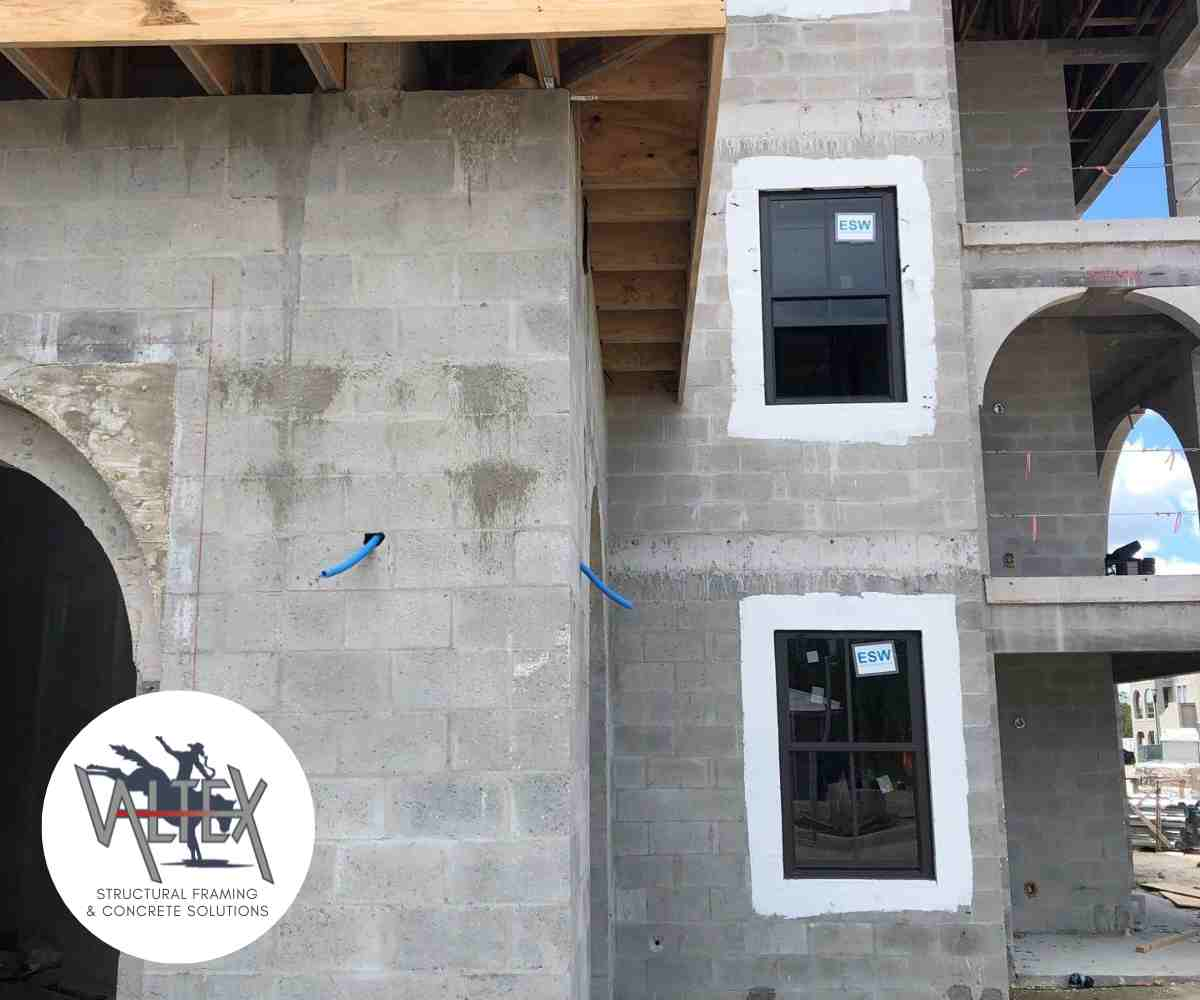
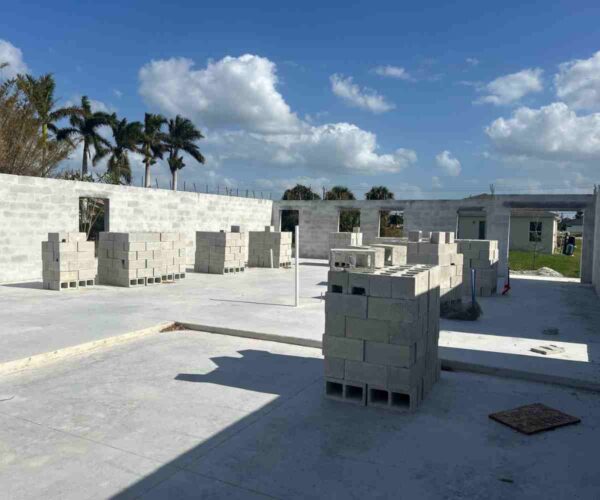
CMU (concrete masonry unit) systems use concrete block units that are reinforced with steel and filled with grout to act structurally. Once reinforced and grouted, CMU walls function as vertical concrete structural elements, not masonry veneer.
CMU concrete systems are:
- Widely used in Florida construction
- Common in both residential and commercial projects
- Integrated with slabs, footings, and bond beams
- Designed to meet structural and wind-load requirements
While the construction method differs from cast-in-place walls, the structural role is the same: load transfer, alignment, and stability.
Whether vertical concrete is cast-in-place or constructed with reinforced CMU, its importance lies in how it performs structurally, not how it is formed. Both systems require accurate layout, proper reinforcement, and coordination with the overall foundation design to perform as intended.
Why Vertical Concrete Is Different From Flatwork
Vertical concrete demands a different level of planning and execution than horizontal flatwork. Unlike slabs, which primarily distribute loads downward, vertical elements must manage compression, lateral pressure, and alignment across multiple planes.
Key distinctions include:
- Formwork designed to resist outward pressure during placement
- Reinforcement engineered for vertical and lateral load paths
- Tight tolerance control, as small errors can compound vertically
- Sequencing that directly affects framing and downstream trades
Errors in vertical concrete don’t remain isolated — they influence everything that follows.
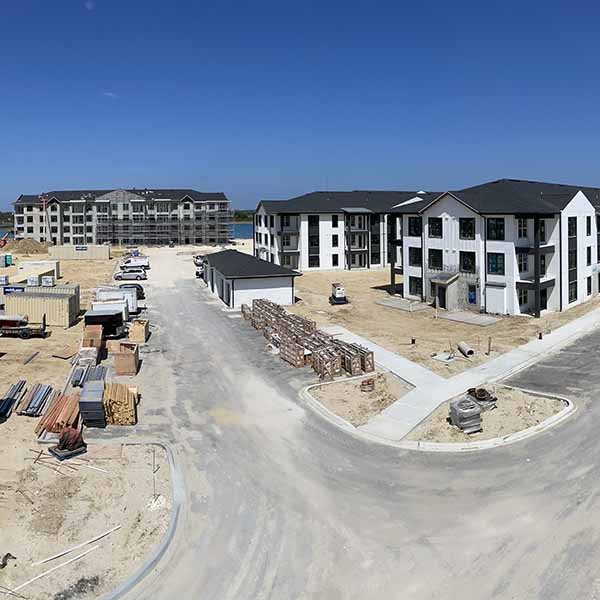
Structural Concrete Walls in SW Florida Construction
In Florida, vertical concrete plays an especially important role due to:
- Variable soil conditions
- High water tables
- Wind-load and uplift requirements
- Code-driven structural demands
These conditions require vertical concrete systems that are properly engineered, accurately formed, and well integrated with the overall foundation design.
Our Approach to Structural Concrete Walls
Vertical concrete is approached as part of an integrated structural system, not as an isolated pour. The focus is on ensuring that footings, walls, slabs, and framing align as intended and perform together over the life of the structure.
This approach emphasizes:
- Accurate layout and form alignment
- Reinforcement placement consistent with engineered plans
- Proper integration between footings and wall systems
- Clean, consistent pours that support subsequent construction phases
Because vertical concrete interfaces directly with multiple structural elements, it must be executed with the full build sequence in mind.
What Proper Vertical Concrete Requires
Successful vertical concrete work depends on:
- Stable, well-supported formwork
- Reinforcement positioned to handle both vertical and lateral forces
- Concrete mixes appropriate for wall placement and curing conditions
- Careful sequencing to avoid misalignment or stress points
- Attention to tolerances that affect framing and finish work
This work requires an understanding of structural behavior and load paths, not just concrete placement.
Scope of Our Work
Valtex’s vertical concrete work is focused on structural concrete systems that support the integrity and performance of the build as a whole. This includes vertical concrete elements that are integral to foundation design, load transfer, and long-term structural stability.
What we handle
- Structural vertical concrete as part of engineered foundation systems
- Stem walls and foundation walls
- Load-bearing concrete walls
- Vertical concrete elements constructed to engineered specifications
- Concrete walls integrated with footings, slabs, and framing systems
Our role is to ensure these elements are executed accurately, aligned correctly, and integrated properly within the overall structural system.
How this work is positioned
Vertical concrete is treated as structural infrastructure, not surface-level work. The emphasis is on performance, durability, and compatibility with the rest of the building system, so everything above it functions as intended over the long term.
Why Experience Matters
Vertical concrete establishes the baseline for everything built above it. Once placed, it cannot be adjusted without significant effort and cost.
Experienced vertical concrete work:
- Improves framing alignment
- Reduces downstream corrections
- Supports proper load transfer
- Contributes to long-term structural stability
This is why vertical concrete should be handled by contractors who understand foundations, structural systems, and construction sequencing.
When vertical concrete carries structural responsibility, experience makes the difference between work that simply passes inspection and work that performs reliably over time. Accurate execution at this stage supports everything that follows and reduces avoidable complications later in the build.
If your project includes structural vertical concrete, working with a team that understands foundations, load paths, and construction sequencing helps ensure those elements are executed correctly from the start. Valtex brings that experience to every structural concrete scope we take on.
Contact Valtex to discuss your project and determine the right approach for your vertical concrete requirements.